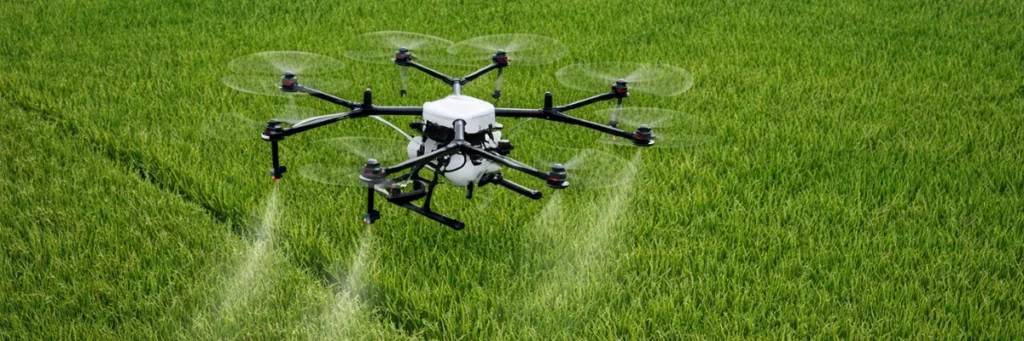
Precision agriculture with drones is getting more attention because farmers are under pressure to do more with less. Input costs are rising, labor is limited, water management is becoming more important, and crop losses often begin in small areas before they become visible across the full field. In that kind of environment, better field visibility is not just useful. It directly affects farm decisions.
That is why more farmers are exploring drones. But before adopting this technology, it is important to understand one thing clearly: drones are not valuable simply because they are modern. They become valuable only when they help farmers make better decisions in the field.
For some farms, drones can improve monitoring, save time, and support more targeted action. For others, hiring a service provider may make more sense than buying equipment. The real benefit comes from knowing what problem the drone is supposed to solve and whether the information collected will actually be used.
What Precision Agriculture Means in Practical Farming
Precision agriculture means managing the field based on actual variation instead of treating every acre in the same way. A field may look uniform from the road, but in reality one section may be too dry, another may have weak plant growth, another may have drainage issues, and another may already be showing signs of stress.
When farmers can identify those differences early, they can respond more accurately. That may mean checking one part of the field sooner, reviewing irrigation performance, adjusting input decisions, or investigating possible pest or disease pressure before the problem spreads.
Drones support this approach by giving a top view of the field much faster than manual observation alone. They do not replace agronomy or on-ground inspection, but they help farmers see where closer attention is needed.
Why Farmers Are Using Drones in Agriculture
Many farmers first become interested in drones because routine field monitoring takes time and often misses patterns that only become obvious when viewed from above. Walking through a farm is still important, but it usually covers selected areas rather than the whole field. On larger farms, that means some early issues may go unnoticed until they affect crop performance more seriously.
Drones help by making field observation faster, broader, and more structured. They can capture aerial visuals that help reveal uneven growth, standing water, weak zones, gaps in development, and signs of stress that deserve closer checking.
This is where drone use becomes practical. The value is not in the flight itself. The value is in how the farmer uses the information afterward.
1. Farmers Should First Define the Purpose
Before using drones, farmers should be clear about why they want them. This is the most important starting point.
Some farms use drones for crop monitoring. Others want help with spraying, field mapping, irrigation checks, or early detection of plant stress. Each purpose requires a different approach. A farmer who wants regular crop-health visibility is not looking for the same solution as someone focused mainly on spraying or topographic mapping.
Without a clear purpose, it is easy to invest in technology that looks useful but does not become part of regular farm decision-making.
A better way to think about adoption is to ask:
- What field problem am I trying to detect earlier?
- What task currently takes too much time?
- What information am I missing during the crop cycle?
- Will drone data help me take action faster?
Those questions are more valuable than starting with price or model names.
2. Not Every Drone Is the Same
Farmers should also understand that agricultural drones are not all designed for the same job.
Some drones are mainly suited for visual crop monitoring. Others are built for spraying. Some are stronger for mapping and surveying. The right choice depends on the farm’s actual use case, not on whichever model is most heavily promoted.
Important features to evaluate include:
- camera type
- image quality
- battery life
- field coverage per flight
- GPS capability
- automated flight functions
- spraying tank size, if spraying is the main purpose
- ease of operation and support availability
Choosing the wrong drone often leads to poor results, not because the technology is bad, but because the equipment does not match the farm’s needs.
3. Farm Size and Field Layout Matter
Drones can be useful on many types of farms, but their value is often stronger when field coverage is harder to manage manually.
On small farms where the owner already walks the land regularly and can observe conditions closely, the added value may be limited unless the crop is high-value or the field has complex irrigation or variability issues. On medium and large farms, the benefit usually becomes easier to justify because a drone can review much more area in less time.
Farmers should think about:
- total land area
- number of separate plots
- travel time between fields
- crop type
- speed at which problems usually develop
- how often field monitoring is needed
A drone becomes more useful when it solves a real visibility problem.
4. Training and Operation Cannot Be Ignored
A common mistake is assuming that once a drone is purchased, the farm will automatically benefit. In reality, useful drone operations require skill.
The operator should understand:
- safe flight basics
- route planning
- field coverage logic
- how to capture usable data
- how to interpret what is seen from above
- when field verification is still needed
Poor operation leads to poor results. Even good equipment will not help much if the images are unclear, flights are inconsistent, or the output is not used properly.
This is one reason many farms begin by hiring a professional service instead of handling everything internally.
5. Regulations Matter More Than Many Farmers Expect
Drone use in agriculture is not just an operational decision. It is also a compliance issue. Farmers and agri-businesses should check the local rules that apply to drone use, pilot requirements, and commercial operations before flying.
This is especially important when drones are being used as part of a business activity, service offering, or farm operation that goes beyond casual personal use. Regulations affect where, when, and how drones can be used.
A helpful blog should be honest here: ignoring compliance can create safety and legal problems that outweigh the short-term convenience of using the equipment without proper checks.
6. Cost Should Be Measured Against Decision Value
Many farmers focus first on purchase price, but that is only one part of the total cost.
The full investment may include:
- drone cost
- batteries
- repairs
- spare parts
- software
- maintenance
- training
- operator time
The better question is not just “How much does the drone cost?” but “What value will this create on my farm?”
If the technology helps identify problems earlier, reduce unnecessary field visits, improve irrigation decisions, or support better crop monitoring, then it may produce real value. If it is only flown occasionally without changing field action, then the return may be weak.
This is why some farms are better served by outsourcing drone work rather than buying equipment immediately.
7. Hiring a Drone Service May Be Smarter Than Buying
Not every farm needs to own a drone.
Hiring a professional drone service may be the better option when:
- drone use is seasonal
- the farm wants expert support
- there is no trained operator available
- the farmer wants results, not equipment management
- the business is still testing whether drone-based monitoring is worth it
Buying may make more sense when:
- the farm will use the drone regularly
- there is enough acreage to justify ownership
- the farm has someone who can operate it properly
- the workflow is clear and repeatable
This is one of the most helpful things a farmer can understand before investing. Ownership is not always the smartest starting point.
8. The Real Advantage Is Better Data for Better Decisions
The biggest advantage of drones is not that they fly. It is that they help farmers see things earlier and more clearly.
Drone imagery can support decisions related to:
- irrigation review
- crop-health checks
- field scouting priorities
- weak-zone investigation
- growth comparison over time
- planning for targeted follow-up action
But data only matters when it leads to action. If drone images are collected and then ignored, the technology adds very little value. The farms that benefit most are the ones that connect drone output to actual management decisions.
That is the real meaning of precision agriculture.
9. Maintenance and Weather Are Real Practical Limits
Farmers should also know that drones are not always ready to fly under every condition.
Weather plays a major role. Strong wind, rain, and poor flying conditions can affect both safety and output quality. Drones also require regular maintenance, battery management, and proper handling.
This may sound basic, but it matters. A tool that works well only when properly maintained and operated should be planned for like any other farm asset.
Helpful content should include these realities, because trust comes from explaining both benefits and limitations.
10. Drones Do Not Replace Farming Knowledge
One of the biggest misunderstandings around agricultural drones is the belief that they somehow replace experience in the field.
They do not.
A drone can show that one part of a field looks weak. It can show unusual patterns, low-vigor zones, or possible irrigation imbalance. But it does not automatically explain the full cause. The farmer still needs field knowledge, agronomic understanding, and on-ground checking to decide what the issue actually is.
So the strongest use of drones is as a decision-support tool. They improve visibility. They do not replace judgment.
What Farmers Should Check Before Adopting Drones
Before investing, farmers should ask themselves a few practical questions:
Do I have a clear reason for using drones?
Will better field visibility help me act earlier?
Do I need this regularly or occasionally?
Will I buy a drone or hire a service provider?
Do I have the time and skill to manage it properly?
Will the data lead to real farm decisions?
These questions help prevent waste and make drone adoption more useful from the beginning.