Heavy Duty Solar Panel Cleaning Drones
When dust, grime, and pollution film build up faster than your team can clean, solar generation drops quietly—along with ROI. Heavy duty solar panel cleaning drones are designed for demanding environments where manual cleaning is slow, risky, or inconsistent. With planned flight paths, repeatable coverage, and optional inspection add-ons, drone cleaning helps maintain output across large rooftops and utility-scale solar farms—especially in high-soiling zones.
Sky Sweeper Drones provides professional drone-based solar cleaning programs built for industrial and high-dust locations, with clear service proof and O&M-friendly reporting.
What Makes a Solar Cleaning Drone “Heavy Duty”?
A heavy-duty solar cleaning drone is not a hobby drone with a spray kit. It’s a purpose-built system engineered for real O&M conditions:
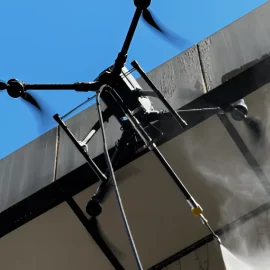
High coverage for large rooftop and ground-mount arrays
Higher endurance & reliability for long cleaning cycles
Stronger cleaning capability for thick dust layers and pollution film
Modular cleaning options (waterless, water-based sprayer, hybrid)
Operational control & documentation suitable for asset owners and O&M teams
Repeatable routes to reduce missed patches and uneven cleaning
Where Heavy Duty Solar Cleaning Drones Make the Biggest Impact
Heavy-duty drone cleaning is ideal for sites where soiling is frequent, heavy, or unpredictable:
Mining / Quarry Belts
- Fine dust that settles daily
- High soiling rates that demand frequent cycles
Agriculture Corridors
- Soil dust + pollen + bird activity
- Seasonal spikes in soiling and cleaning demand
Warehouses & Commercial Roof Arrays
- Minimum disruption preferred
- Faster cleans without heavy manpower movement
Utility-Scale & Large Ground-Mount Solar Farms
- High daily dust settlement
- Long row lengths and large plant footprints
- Need for repeatable schedules and standardized reporting
Industrial Rooftops
- Cement, steel, foundries, process dust zones
- Logistics sheds and large roof spans
- Tight maintenance windows and access constraints
Ports & Coastal Zones
- Salt mist + sticky grime film
- Surface deposits that reduce light transmission faster
Cleaning Technologies Available
Heavy-duty systems typically support one or more cleaning modes depending on water availability, dirt type, and cleaning frequency.
Waterless (Dry) Cleaning
Best for: Loose dust, pollen, and light sand where water use is restricted.
Contact-free cleaning with no aggressive brushing on glass.
Fast maintenance cleaning for frequent cycles.
Ideal for dusty-region routine programs.
Recommended when: dust is the main issue and cleaning is done often.
Water-Based Sprayer Cleaning
Best for: Sticky grime, bird droppings, and pollution film.
Controlled spray coverage for uniform cleaning.
Effective for deep and stubborn residue.
Works well in coastal and industrial zones.
Recommended when: panels show stains, film layers, or hardened droppings.
Hybrid Cleaning (High-Soiling Sites)
Best for: Mixed dirt levels across large solar plants.
Combines waterless cleaning with rinse or spot treatment.
Handles varying dirt types within the same site.
Ensures consistent performance across all plant blocks.
Recommended when: soiling varies by block, wind direction, or plant section.
Key Benefits of Heavy Duty Solar Panel Cleaning Drones
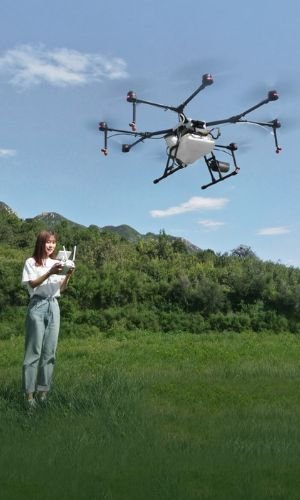
Safer Than Manual Cleaning
Drone cleaning reduces repeated work-at-height exposure. Operators remain ground-based with defined safety perimeters—especially valuable for large rooftops and utility-scale arrays.
Faster Coverage, Less Downtime
Planned routes and optimized coverage help reduce cleaning time on large arrays—ideal for sites that can’t afford long shutdown windows.
More Consistent Results
Pre-planned flight paths reduce missed patches and uneven cleaning that can happen with manual crews (especially on long rows or large rooftops).
Lower Long-Term O&M Friction
Less dependency on large cleaning manpower, easier scheduling, and repeatable quality—useful for portfolio owners and multi-site operators.
Optional Inspection Add-On (High Value)
Add inspection data (thermal + visual) to support corrective maintenance decisions:
- Hot spots / abnormal heat patterns
- Broken glass, micro-cracks (visible signs), corrosion indicators
- Shading issues, soiling patterns, mismatch clues.
This helps your O&M team prioritize repairs and reduce avoidable energy loss.
Heavy Duty Drone Cleaning vs Manual Cleaning
Factor | Heavy Duty Drone Cleaning | Manual Crew Cleaning |
Safety | Ground-controlled, lower work-at-height exposure | Higher work-at-height risk |
Speed on large sites | High with repeatable routes | Slower, labor-dependent |
Water usage | Waterless or controlled sprayer options | Often higher usage |
Consistency | Uniform coverage | Varies by crew & access |
Reporting | Service proof + optional inspection | Often limited documentation |
Scalability | Easy to standardize across multiple sites | Harder to maintain uniform quality |
How it Works
Heavy-duty drone cleaning is ideal for sites where soiling is frequent, heavy, or unpredictable:
1) Inspection Capture (Optional)
- Thermal + visual scans aligned with your O&M needs
- Block-wise observations for easier maintenance action
2) Mission Planning
- Optimized flight paths for consistent coverage
- Obstacle avoidance planning and safety buffer zones
- Route standardization for repeat visits
3) Cleaning Execution
- Waterless / sprayer / hybrid mode based on requirement
- Repeatable passes to minimize missed areas
- On-ground supervision and checklist-driven execution
4) Site Assessment
We assess:
- Array layout and access points
- Soiling type (dust, film, droppings, salt mist)
- Water restrictions and safety requirements
- Roof obstacles (parapets, HVAC units, skylights) or ground-mount row configuration
5) Report Delivery
You receive:
- Service proof (coverage notes, before/after samples where feasible)
- Cleaning mode used + recommendations
- Inspection summary (if added)
Service Plans
Scheduled Cleaning Programs
Planned drone cleaning to keep output steady—monthly for high-dust sites, quarterly for most rooftops, bi-annual/seasonal for low-soiling areas (final frequency depends on soiling rate and generation drop).
One-Time Deep Clean + Baseline Report
A single deep clean for post-construction, commissioning, pre-handover, or AMC renewal—removes heavy film/stains and gives a baseline report + next-step recommendations.
Portfolio / Multi-Site Maintenance
One SOP across all sites with centralized reporting and cleaning history—optional thermal/visual logs to support O&M planning.
Why Choose Sky Sweeper Drones for Heavy Duty Solar Cleaning
Industrial-grade drone systems
Built to perform reliably in high-soiling zones like industrial belts, mines, highways, ports, and large solar farms.
Repeatable quality every visit
Using planned flight routes, standard checklists, and controlled coverage to reduce missed patches.
Clear documentation & service proof
For asset owners, facility teams, and compliance requirements—especially useful for multi-site portfolios.
Surface-safe cleaning methods
That avoid harsh brushing on glass, helping protect panel coatings and long-term performance.
Optional inspection add-ons
(thermal + visual) with reports that help O&M teams act faster on hot spots, defects, and recurring soiling patterns.
Professional, safety-first execution
Designed to minimize disruption and keep operations running smoothly while cleaning is performed.
FAQ - Heavy Duty Solar Panel Cleaning Drones
Are heavy duty solar panel cleaning drones effective on thick dust?
Yes—especially when cleaning is scheduled regularly. For cemented dirt or sticky residue, sprayer or hybrid cleaning delivers better results.
Is waterless drone cleaning enough for bird droppings?
Waterless cleaning works for loose dirt, but hardened droppings usually need spot-treatment or a controlled rinse.
Do cleaning drones damage solar panels?
When operated correctly with surface-safe settings and proper standoff distance, risk is minimal—often lower than improper brushing or harsh manual handling.
How often should solar panels be cleaned in dusty areas?
High-dust zones often need monthly or more frequent cleaning. The right schedule depends on local soiling rate and the generation drop you observe.
Can drones clean both rooftop and solar farm panels?
Yes. Heavy-duty drones can be used for rooftops and ground-mount solar farms, with mission planning adapted to obstacles, access, and row layouts.
Do you provide inspection along with cleaning?
Yes. We offer thermal and visual inspection add-ons to identify hot spots and visible defects, helping your O&M team plan corrective actions.