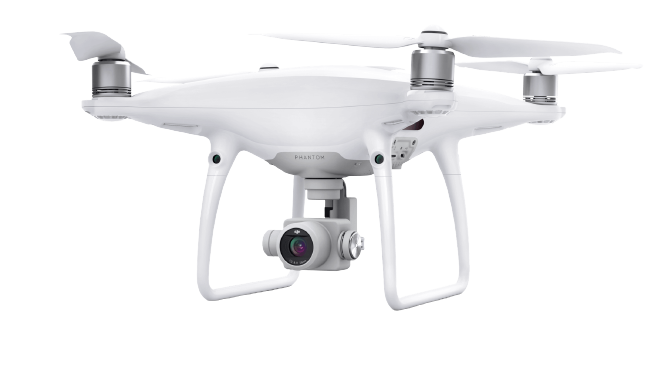
Agricultural Spraying Drones
An agricultural spraying drone helps farmers and agribusinesses spray crops faster, with uniform application and reduced labour dependence. Instead of manual knapsack spraying or tractor spraying that can damage crops or struggle in wet fields, drones fly planned routes to apply pesticides, fungicides, and foliar nutrients efficiently—especially when spray windows are short and field entry is difficult.
In India, adoption is also being promoted through initiatives like Namo Drone Didi, which supports women SHGs to provide drone services to farmers on a rental/service basis.
Agricultural spraying drones are advanced aerial systems designed for precise, efficient, and consistent spraying across modern farming environments. Whether you need a drone for pesticide spraying, fertilizer application, orchard spraying, plantation coverage, or greenhouse operations, a well-matched spraying drone helps improve coverage, reduce manual effort, and optimize resource use. From open farm fields to controlled horticulture environments, agricultural spray drones provide a practical solution for businesses looking for faster and more uniform spraying performance.
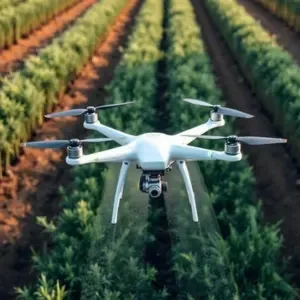
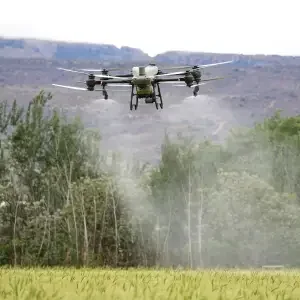
Crop-Based Spraying Solutions
- Accurate spray control
- Consistent application results
- Reduced overlap and wastage
- Better operational planning
- Improved field productivity
For businesses handling drone spraying for agriculture fields, choosing the right platform means selecting equipment that matches coverage needs, crop type, and working conditions.
Features of Spraying Drones
High Capacity Tank and Payload
High-capacity and heavy-payload spraying drones are suitable for larger spraying operations where coverage speed and refill efficiency matter. A larger tank and stronger payload system can reduce the number of operating cycles required for each job.
Long Flight Performance
Long-flight spraying drone systems help minimize interruptions during operation. When evaluating a drone, it is important to compare not only flight time, but also battery change speed and overall field productivity.
Multi-Nozzle Spray System
A multi-nozzle setup supports more even liquid distribution and improved spray consistency. Uniform spray output is essential for farms that require controlled application across different crop environments.
Precision Control and Route Planning
Modern agricultural spray UAVs use intelligent control systems to maintain accuracy during spraying. Stable flight, controlled spray flow, and planned coverage routes help improve repeatability and reduce unnecessary overlap.
Battery-Powered Operation
Battery-powered spraying drones offer an efficient and practical alternative for agricultural operations that want reliable field performance with reduced manual workload.
Benefits of Agricultural Spraying Drones
Faster Coverage
One of the biggest advantages of drone spraying is fast spraying for large farms, especially where time-sensitive application is important.
Better Resource Efficiency
These systems support an efficient farm spraying solution by improving coverage control and reducing unnecessary overlap.
Reduced Chemical Use
With better targeting and controlled flow, many farms use drones to reduce pesticide usage with drones, helping improve application efficiency.
Smarter Water Management
A well-configured spraying drone can also support a water saving spraying solution, especially in operations where precise dispensing matters.
Reduced Dependence on Manual Labor
For farms dealing with workforce challenges, drones can act as a labor shortage solution agriculture drone users can depend on for routine spraying needs.
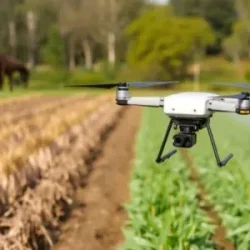
Choosing the Right Spraying Drone
- Tank capacity
- Payload strength
- Spray width
- Nozzle design
- Flight endurance
- Battery workflow
- Maintenance support
- Application suitability
Agricultural Spraying Drone Usage Environments
Spraying drones are suitable for a wide range of agricultural environments where controlled, uniform, and efficient liquid application is required. Their flexibility makes them useful in both open and managed operational settings.
Open Agricultural Areas
In large open areas, spraying drones help improve coverage speed and maintain more consistent spray distribution. They are useful where wide spaces need to be handled efficiently with reduced manual effort and better operational control.
Managed Farming Zones
In organized agricultural layouts, spraying drones support planned and systematic spraying operations. Their controlled movement and even dispensing help improve consistency across areas that require repeated and well-managed treatment. `
Sensitive Plant Management Areas
For environments that require careful and uniform spraying, drones help deliver better control and reduced variation in liquid application. This is especially important where operational precision and repeatable spraying performance are a priority.
Large-Scale Operational Coverage
Spraying drones are also valuable in operations where faster coverage and better workflow efficiency are important. Their ability to cover more area in less time makes them a practical option for businesses looking to improve productivity and reduce manual dependency. This flexibility makes agricultural spraying drones suitable for diverse operational conditions where consistency, efficiency, and controlled spraying performance are essential.
Why Choose Us for Agricultural Spraying Drones
Pan India Supply
We provide agricultural spraying drones across India, making it easier for businesses in different regions to access reliable spraying solutions.
Competitive Pricing
We offer cost-effective spraying drone solutions with a strong balance of quality, performance, and value.
On-Time Delivery
Our team focuses on timely delivery so your operations can move forward without unnecessary delays.
Reliable Service Support
We are committed to providing dependable customer support before and after purchase.
Quality-Focused Solutions
Our spraying drones are selected to deliver consistent performance, efficient coverage, and reliable operation.
Guidance for the Right Selection
We help customers choose the most suitable drone based on operational needs, area coverage, and application requirements.
Trusted Business Approach
We focus on transparency, service commitment, and long-term customer satisfaction.
Solutions for Different Operational Needs
Whether you need a compact spraying drone or a higher-capacity system, we offer options for different agricultural environments.
FAQ- drone sprayer for agriculture
What is an agricultural spraying drone?
An agricultural spraying drone is an unmanned aerial system designed to apply pesticides, liquid fertilizers, and other approved crop inputs with controlled and uniform coverage. It is used to improve spraying efficiency, reduce manual effort, and support better field operations.
Which crops can be sprayed using a drone?
Agricultural spraying drones can be used for multiple crops, depending on the approved product, operating parameters, and crop-specific guidelines. In India, crop-specific SOPs have been issued for paddy/rice, maize, cotton, groundnut, pigeon pea, safflower, sesame, soybean, sugarcane, and wheat.
Can drones be used for both pesticide spraying and fertilizer spraying?
Yes. Spraying drones are used for pesticide application as well as nutrient application, provided the operation follows the relevant SOPs, dosage guidance, and crop requirements. The Government of India has publicly released crop-specific SOPs for both pesticide and nutrient application through drones.
Are agricultural spraying drones suitable for large farms?
Yes. Spraying drones are widely used where large areas need timely coverage and where manual or ground-based spraying is slower or less practical. Official guidance also notes that drones help treat large areas quickly and can be useful when field conditions limit movement of people or machines.
How does drone spraying help reduce pesticide and water use?
Drone spraying is valued for more precise application and better targeting, which can reduce unnecessary overlap and wastage. Search-facing industry guidance commonly highlights reduced pesticide and fertilizer use through precision spraying, while official SOPs focus on safe, effective, and controlled application.
Do I need trained operators for agricultural drone spraying?
Yes. Drone spraying should be carried out by trained personnel and in line with operating, safety, and statutory requirements. India’s SOP framework for drone pesticide application covers items such as flying permissions, certification, safety, weather conditions, and operational planning.
Can the same spraying drone be used for different chemicals and crops?
Yes, but proper cleaning and switching procedures are important when changing products or moving to another crop, especially where crop sensitivity is a concern. Spray-drone guidance for applicators recommends rinsing and using tank-cleaning practices when switching products.
Which crops are suitable for spraying drone operations?
Spraying drones are suitable for a wide range of crop spraying requirements, including paddy, wheat, maize, cotton, soybean, sugarcane, groundnut, and sesame. The right drone should be selected based on crop height, field layout, spray requirement, and operational goals.
Can I choose different drones for pesticide and fertilizer spraying?
Yes. A pesticide spraying drone is typically selected for crop protection spraying, while a drone fertilizer sprayer or fertilizer spraying drone may be preferred where nutrient application efficiency is important. The right choice depends on tank capacity, spray system, and field requirement.