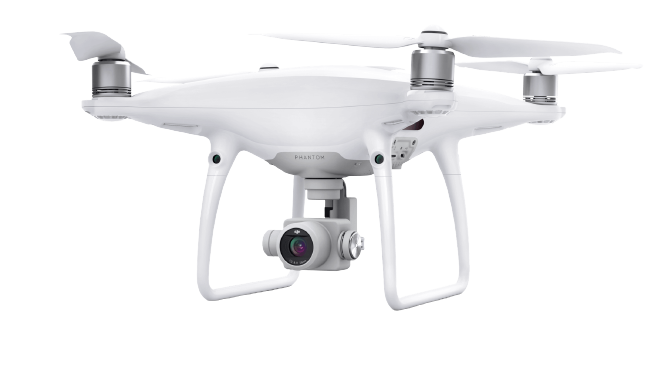
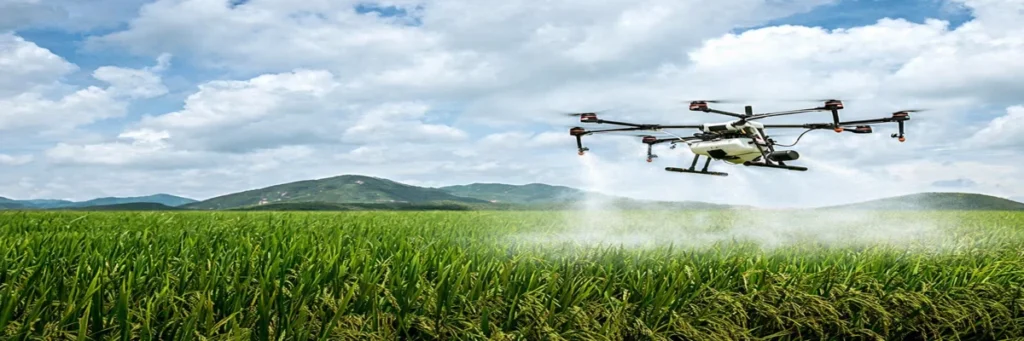
Drones help in crop monitoring and field analysis by giving farmers a faster and more complete view of what is happening across the field. Instead of relying only on ground-level checks, farmers can use drones to identify uneven crop growth, stressed areas, irrigation-related issues, damaged patches, and field variations much earlier. This helps them inspect the right areas faster and make better decisions during the crop cycle.
That is the real value of drones in farming. They do not replace field knowledge. They make field monitoring more accurate, more efficient, and more useful.
Why Crop Monitoring Matters in Farming
Good crop monitoring is not just about looking at plants and checking whether they appear healthy. It is about understanding how the field is performing as a whole and noticing where conditions are changing before the problem becomes harder to manage.
In many farms, crop performance is not uniform. One section may be growing well, while another may show weaker development because of irrigation imbalance, poor drainage, pest activity, crop stress, or uneven field conditions. If these differences are not noticed at the right time, the response is delayed. And in farming, delay often means greater loss.
This is why crop monitoring matters so much. It gives farmers the chance to act early.
The Problem With Only Manual Field Checking
Manual field visits are still important, and they always will be. Farmers understand their land best by seeing it directly. But manual checking alone has limitations, especially when fields are large, spread across multiple plots, or difficult to inspect fully in one round.
A farmer walking through one side of the field may notice visible issues there, but problems in another section may not be seen until later. Also, some patterns are easier to understand from above than from within the crop itself. Uneven growth, patchy sections, water-related variation, and damaged zones may not be obvious from the ground at first.
This is where drones become useful. They help farmers see the full field more clearly, not just one part at a time.
How Drones Improve Crop Monitoring
Drones improve crop monitoring by making field review faster and broader. A drone can cover large areas in a short amount of time and provide a top-down view that helps reveal differences across the field.
This wider perspective helps farmers notice:
- uneven crop growth
- weak or damaged patches
- areas that may have irrigation problems
- sections that need closer physical inspection
- visible changes in field condition over time
Instead of spending long hours trying to judge overall crop condition only from scattered field visits, farmers can first use drone monitoring to understand where the real concern may be.
That makes follow-up action more focused and more practical.
Drones Help Detect Uneven Crop Growth Earlier
One of the most useful benefits of drone-based crop monitoring is the ability to detect uneven growth earlier. A field may seem normal at first, but certain sections may develop differently because of water distribution, soil condition, pest impact, or plant stress.
When these patterns are visible early, farmers can investigate the affected area before the issue spreads further or becomes more difficult to manage. This is much more useful than discovering the problem only after the crop difference becomes clearly visible across a larger part of the field.
Early detection is one of the biggest reasons drones matter in crop monitoring. They help farmers respond while there is still time to correct the problem.
Better Field Analysis Leads to Better Decisions
Field analysis means understanding what is happening in different parts of the farm and using that understanding to guide decisions. Drones make this easier by improving the quality of field observation.
For example, a drone can help reveal that one side of the field is developing more slowly than the rest. It can show that one patch looks weaker, that crop density is inconsistent, or that a section may be holding too much or too little water. Once that area is identified, the farmer can inspect it directly and decide what action is needed.
This is what makes drone-based field analysis valuable. It does not simply provide images. It helps direct attention to the places where decisions matter most.
Drones Help Farmers Save Time During Critical Stages
Timing is one of the most important parts of farming. When crops are at a sensitive stage, even a short delay in detecting problems can affect the outcome. But manual monitoring takes time, and many farmers are already balancing multiple tasks such as irrigation, labor, spraying, and input planning.
Drones help reduce this time pressure. Instead of checking the entire field manually to locate a possible issue, farmers can use drone monitoring to identify the sections that need immediate attention.
This makes field review more efficient. It also helps farmers use their time better, especially during periods when regular crop observation is necessary but daily full-field checks are difficult.
How Drones Help Identify Irrigation Problems
Water-related issues are common in farming, and they are not always easy to spot early from the ground. One part of the field may receive too much water, while another may not be getting enough. In some cases, drainage problems may affect crop condition in a specific zone without being obvious at first.
Drones help by making these differences easier to notice across the field. If one area appears weaker, patchier, or visibly different from the surrounding crop, it can point the farmer toward a possible irrigation-related issue. The drone does not confirm the exact cause on its own, but it helps identify where closer field inspection is needed.
That is a major practical advantage. Instead of guessing where the problem might be, farmers can inspect a more specific area and respond sooner.
Drones Support Smarter On-Ground Inspection
A common mistake is to think drones replace farmers walking the field. In reality, drones make on-ground inspection more effective.
Without drone monitoring, a farmer may need to spend more time trying to find where the problem is. With drone support, the farmer can first identify the affected section and then inspect that area directly. This improves both speed and accuracy.
In other words, drones do not remove the importance of field knowledge. They make field knowledge easier to apply in the right place at the right time.
Useful for Large Farms and Multiple Plots
Drones are especially helpful when farms are large or when agricultural operations involve multiple plots. In these situations, monitoring becomes more difficult because it takes longer to review all areas consistently.
For larger farms, agri-businesses, contract farming operations, and farmer groups, drones provide better oversight. They make it easier to compare field sections, identify changes, and decide where follow-up is needed first.
This is one reason drone services are becoming more important in practical agriculture. They help improve visibility where scale makes manual monitoring more difficult.
Why Drones Matter for Field Analysis in Real Farming Conditions
The real benefit of drones is not that they are advanced technology. Their benefit is that they solve a practical field problem. Farmers need to know where crop condition is changing, where the field looks uneven, and where time should be spent first. Drones help answer those questions more efficiently.
That makes them useful in real farming conditions, especially where:
- fields are too large to review quickly by foot
- crop issues need early detection
- irrigation variation affects field performance
- time and labor are limited
- regular monitoring is needed during important crop stages
This is why drones are becoming more relevant. They improve visibility where it matters most.
Drones Help Turn Observation Into Action
The biggest value of crop monitoring is not observation alone. It is action. If a farmer can identify a stressed area sooner, inspect it faster, and respond before the issue spreads, the monitoring process becomes truly useful.
Drones support that process by helping farmers move from broad field checking to targeted action. Instead of treating the field as if every part is performing the same way, they can focus attention where it is actually needed.
That shift from general observation to practical response is what makes drones valuable in crop monitoring and field analysis.