Solar plants and utility systems need regular inspections to work properly. If problems are not found early, they can lead to energy loss, damage, safety risks, and higher maintenance costs. Traditional inspections often take more time and may require workers to walk through large areas or access difficult locations.
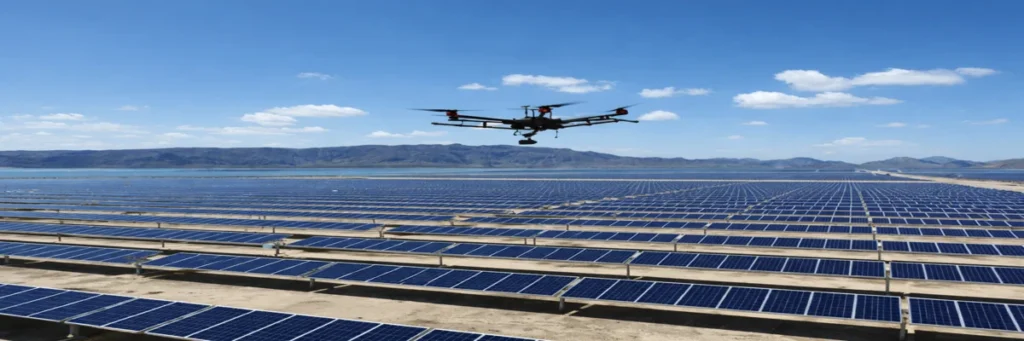
This is where drones are becoming very useful. Drones help in solar plant and utility inspections by making inspections faster, safer, and easier. They can cover large areas quickly, capture clear visuals, and help teams identify issues without depending only on manual checks.
In simple words, drones help inspection teams find problems faster and manage assets more efficiently.
What Are Drone Inspections?
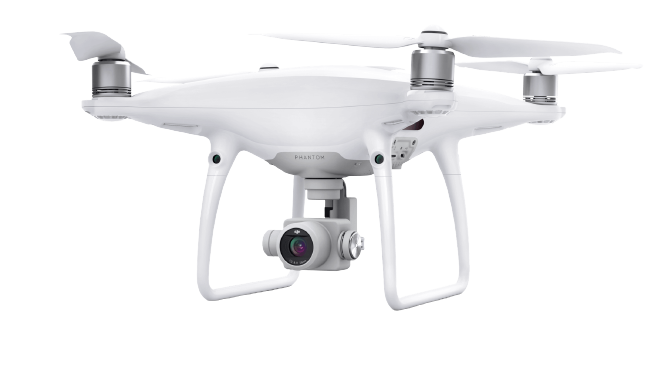
Drone inspections use drones with cameras and sensors to inspect equipment, structures, and outdoor assets from the air.
In solar plants and utility systems, drones are often used to inspect:
- solar panels
- substations
- power lines
- transformers
- utility corridors
- electrical infrastructure
- plant boundaries
- outdoor equipment
Instead of checking every section manually, teams can use drones to collect visual information quickly.
Why Solar Plant Inspections Are Important
Solar plants cover large areas and include many panels working together. If some panels are damaged, dirty, misaligned, or not performing properly, the overall output of the plant can be affected.
Regular inspections help identify:
- damaged solar panels
- dirt or dust buildup
- hot spots
- broken modules
- loose connections
- visible wear and tear
Finding these problems early helps improve plant performance and reduce energy loss.
How Drones Help in Solar Plant Inspections
1. Faster Inspection of Large Solar Farms
Solar plants can spread across large open areas. Manually checking every panel takes a lot of time and effort.
Drones can fly over the plant and inspect large sections quickly. This helps inspection teams complete the work much faster than traditional methods.
2. Better Visibility of Solar Panels
Drones provide a top view of the full solar plant. This makes it easier to inspect rows of panels and spot visible issues across a large site.
Teams can use drone visuals to identify:
- damaged panels
- unusual panel conditions
- dust accumulation
- broken sections
- alignment problems
3. Safer Inspections
Manual inspections in solar plants may require workers to walk long distances in heat and inspect outdoor electrical equipment closely. Drones reduce this need by allowing inspections from a safer distance.
This improves worker safety and reduces physical effort.
4. Supports Maintenance Planning
When drones help identify affected areas quickly, maintenance teams can plan repair work more efficiently. Instead of checking the whole plant manually, they can focus only on the sections where problems are visible.
Why Utility Inspections Are Important
Utility systems such as power lines, substations, transformers, and transmission infrastructure must be inspected regularly to maintain performance and safety.
If utility issues are not detected early, they can lead to:
- service interruptions
- equipment failure
- safety hazards
- high repair costs
- power loss
That is why regular utility inspection is very important.
How Drones Help in Utility Inspections
1. Inspecting Power Lines and Transmission Assets
Utility lines often run through long and difficult routes. Manual inspection of these assets can be slow and challenging.
Drones help by flying along these routes and capturing visuals of:
- power lines
- poles
- towers
- fittings
- visible damage
- surrounding conditions
This makes utility inspections faster and more practical.
2. Better Access to Difficult Locations
Some utility assets are located in remote, elevated, or hard-to-reach areas. Drones can inspect these locations without requiring teams to travel through difficult terrain or climb structures unnecessarily.
This is useful for:
- transmission towers
- remote substations
- hillside utility routes
- long corridor inspections
3. Safer Inspection Around Electrical Infrastructure
Working near electrical systems can involve safety risks. Drone inspections help reduce direct human exposure by allowing teams to inspect visually from a distance before taking further action.
This supports safer inspection planning.
4. Faster Fault Detection
Drones help teams spot visible faults or damaged areas quickly. This allows maintenance teams to respond faster and reduce the chance of bigger issues later.
Main Benefits of Drones in Solar Plant and Utility Inspections
Drones provide several important benefits for inspection work.
Saves Time
Drones cover large areas much faster than manual inspections.
Improves Safety
They reduce the need for workers to inspect risky or difficult areas directly.
Better Site Coverage
A drone can inspect a wider area in less time.
Helps Early Problem Detection
Visible issues can be identified earlier before they become bigger problems.
Supports Better Maintenance
Inspection teams can focus repair work where it is actually needed.
Reduces Manual Effort
Less walking, climbing, and physical inspection is required.
Drone Inspection vs Manual Inspection
| Factor | Drone Inspection | Manual Inspection |
|---|---|---|
| Speed | Fast | Slower |
| Area Coverage | Covers large areas quickly | Limited by time and access |
| Safety | Safer with less direct exposure | Higher physical risk |
| Access | Easy in remote and elevated areas | Difficult in hard-to-reach locations |
| Effort | Less manual effort | More physical work |
| Best For | Large solar plants and utility assets | Small and close-up checks |
Where Drones Are Most Useful
Drones are especially useful in:
- solar power plants
- transmission line inspections
- substations
- electrical utility corridors
- large outdoor utility assets
- remote energy infrastructure
In these areas, faster coverage and safer access make drone inspections very valuable.
Limitations to Consider
Although drones are very helpful, some points still need attention:
- trained operators are required
- weather can affect drone flights
- battery limitations must be managed
- some issues still need manual verification
- proper planning is needed for inspection work
So, drones should be seen as a strong support tool, not a full replacement for every technical inspection.