Hybrid Building Cleaning Drones
Most buildings don’t have just one surface—or one type of dirt. A typical high-rise combines glass curtain walls, ACP/metal cladding, stone/precast bands, and high-soiling zones near vents, signage, entrances, and canopies. That’s why hybrid building cleaning drones are the most practical long-term maintenance model—mixing waterless dust removal, water-based deep cleaning, and detergent-assisted stain treatment only where needed.
Instead of forcing one method everywhere, hybrid drone building cleaning matches the approach to the surface and the soiling type—so results look better, operations run smoother, and costs stay controlled.
What Are Hybrid Building Cleaning Drones?
Hybrid cleaning is a multi-method drone facade cleaning program delivered under one coordinated service:
- Waterless / contact-free cleaning for frequent dust buildup
- Water-based facade cleaning drone cycles for grime film, droppings marks, and deep cleaning
- Detergent/chemical-assisted treatment (site-approved) for oil/soot/grease stain zones
- Optional inspection capture (visual/zoom/thermal where relevant) for documentation and defect spotting
This is ideal for property managers who want consistent exterior appearance without repeated scaffold projects.
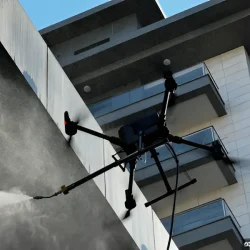
Hybrid Cleaning Cycles (Simple Options)
Option A
Routine Waterless + Quarterly Water-Based Deep Clean (Most Common) Controls daily dust with a waterless facade cleaning drone cycle and restores clarity on scheduled deep cleans.
Option B
Water-Based + Targeted Detergent for Stain Zones Best for buildings near heavy traffic, kitchens, diesel soot corridors, or industrial fallout.
Option C
Seasonal Program (Recommended) Dry season: more frequent waterless cleaning. Post-monsoon/post-storm: deep clean + optional inspection and restoration.
When Hybrid Drone Facade Cleaning Is the Best Choice
| Situation / Need | What You’re Dealing With | Why Hybrid Facade Cleaning Drones Fit Best |
|---|---|---|
| Mixed facade materials | Glass + ACP/metal cladding + stone/precast on the same building | Uses the right method per surface instead of one method everywhere |
| Mixed soiling types | Dry dust + sticky grime film/pollution haze | Combines waterless routine cleaning with water-based deep cleaning as needed |
| Recurring stain zones | Exhausts, kitchens, loading bays, signage areas, canopies | Allows targeted detergent-assisted treatment only on problem zones |
| Occupied buildings | Active entrances, tenants, high public movement | Smaller footprint and planned routes reduce disruption and access issues |
| Multi-property management | Multiple buildings/sites under one facility team | Standardized SOPs and reporting for easy tracking, audits, and planning |
Key Benefits for Building Owners
Lower total water + chemical use
Only used where needed—no blanket washing across the entire facade.
Better finish across all surfaces
Better finish across all surfaces: Glass stays clearer, cladding looks cleaner, and stain zones get the right treatment.
Predictable maintenance planning
Clear cycles make budgeting and scheduling simpler for facility teams.
Reduced disruption
Smaller footprint than scaffolding and easier scheduling around entrances and public areas.
Consistent documentation
Reports show what was cleaned, what was treated, and what was observed.
Industries We Serve (Hybrid Building Cleaning Drones)
Institutions: Hospitals, schools, and public buildings needing safe, low-disruption cleaning.
Industrial Facilities: Plants exposed to soot/oil mist and heavy dust where mixed-soiling is common.
Commercial High-Rises: Office towers, malls, mixed-use buildings, and business parks with glass + cladding exteriors.
Hospitality & Retail: Hotels, storefronts, atriums, and signage zones where appearance impacts guest experience and footfall.
Transport Hubs (Site-Permit Dependent): Terminals, canopies, and large glass structures with complex access and public movement.
How It Works (Hybrid Building Cleaning Drones)
Inspection Capture (Optional)
Visual/zoom (and thermal where relevant) documentation with condition notes for maintenance follow-up.
Method Selection
A zone-wise plan is created—waterless / water-based / detergent-assisted cleaning based on surface and stain type.
Autonomous Flight Planning
Obstacle-aware routes are set for consistent, repeatable coverage across elevations and sections.
Cleaning Execution
Multi-method cleaning is performed exactly as planned to avoid over-cleaning and reduce waste.
Site Assessment & Surface Mapping
We identify material types, dirt severity, and sensitive/high-soiling zones across the building.
Report Delivery
You receive service proof, treated-zone details, and maintenance-ready notes in a clear format.
Services We Offer (Hybrid Building Cleaning Drones)

Scheduled Hybrid Cleaning Programs
Monthly or quarterly cycles planned around your building location, pollution level, and appearance standards to keep facades consistently clean.
One-Time Hybrid Restoration Clean
Best for post-construction dust, long-neglected facades, seasonal restoration, or pre-handover readiness with a clear baseline outcome.
Multi-Site Hybrid Maintenance
For multi-building operators—centralized reporting across properties with standardized cleaning history and repeat-issue tracking for easier facility control.
Why Choose Sky Sweeper Drones for Hybrid Building Cleaning
Repeatable routes
Planned flight paths and checklists deliver consistent quality across visits.
Minimal disruption planning
Designed for occupied buildings with smaller setup footprint and safer ground-controlled execution.
Scalable programs
Portfolio-ready schedules and standardized reporting for multi-building operators.
Controlled water/chemical use
Site-approved solutions with measured dosing to reduce waste and risk.
Surface-specific protocols:
We match the cleaning method to glass, cladding, stone, and stain zones—no one-size approach.
Clear reporting
Service proof and notes that support facility tracking and audits.
FAQs– Chemical / Detergent Spray Cleaning Drones
What is hybrid drone facade cleaning?
It’s a combined approach that uses waterless cleaning for routine dust, water-based spray for film/grime, and detergent-assisted treatment only for stubborn stain zones.
Why choose hybrid instead of only water-based cleaning?
Hybrid avoids unnecessary water washing across the entire facade and targets deep cleaning only where needed—often reducing water use and disruption.
Is hybrid cleaning safe for glass, ACP cladding, and stone?
Yes, when method + pressure + distance + solution are matched to the surface and applied with surface-safe protocols.
Do you use chemicals on every building?
No. Detergents are used only for oil/soot/grease or stain-prone zones, and only with site-approved products.
How do you decide which zones need waterless vs water-based vs detergent cleaning?
We do a surface/soiling assessment and create a zone-wise plan based on material type, dirt severity, and recurring stain areas.
Are the detergents eco-friendly?
Where possible, we prefer site-approved, surface-safe detergents/degreasers and use only the required concentration—final selection depends on the surface and stain type.
Do you always need a rinse after chemical application?
Often yes. Many stain-removal methods work best as pre-spray → dwell → rinse, especially on soot/grease films and streaking.
Can detergent drones remove heavy oil/grease near kitchen exhausts?
Yes—degreaser-assisted cleaning is specifically suited for greasy residue around vents/exhaust zones where water-only washing underperforms.
Is drone detergent cleaning suitable for all facade materials?
Not always—material type and facade condition matter, so we assess the surface and pick the safest effective method (or recommend alternatives).
How long does a detergent drone cleaning job take?
It depends on building height, stained area size, access constraints, and dwell/rinse cycles—detergent cleaning is usually faster than repeated water-only attempts on stubborn stains.
Do you need to restrict access during cleaning?
For safety, we typically define a controlled work zone below treated areas and schedule around peak foot traffic to minimize disruption.
Can detergent cleaning be combined with normal facade cleaning plans?
Yes—many sites use a hybrid program: routine waterless/water-based cleaning, and detergent-assisted cleaning only for recurring stain zones.