Water Based Solar Panel Cleaning Drones
In many sites, dust doesn’t stay “dry.” Over time it mixes with humidity, pollution, or residue and forms a thin film that blocks sunlight. Bird droppings, coastal salt mist, and industrial grime can also stick to the glass and reduce output. Water based solar panel cleaning drones solve this with controlled spray cleaning that lifts stubborn dirt and restores panel clarity—without deploying large roof crews or relying on slow manual washing.
This option is best for deep cleaning cycles on commercial rooftops, industrial sheds, and solar farms where waterless cleaning alone isn’t enough.
What Are Water Based Solar Panel Cleaning Drones?
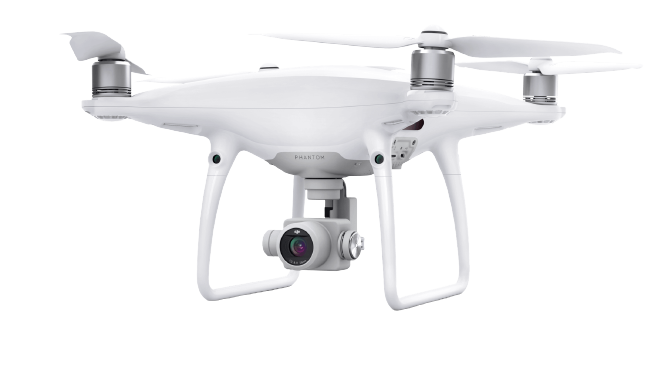
A water-based solar cleaning drone is an industrial UAV equipped with a spray system (nozzles/spray bar) that applies water in a controlled pattern across the solar array. It cleans efficiently while maintaining safe distance, consistent coverage, and manageable water usage.
Many sites also prefer filtered/treated water (as required) to reduce spotting and achieve a cleaner finish.
When You Should Choose Water-Based Drone Cleaning
Water-based drone cleaning is ideal when you notice:
- Bird droppings marks or hardened patches
- Pollution staining and sticky dust film
- Coastal salt haze forming a cloudy layer
- Industrial residue (soot/exhaust fallout)
- Long gaps between cleaning where dirt bonds to the glass
- Visible generation drop even after dry cleaning.
What It Cleans Best
Highly effective for:
- Sticky grime and bonded dust film
- Droppings stains and heavy-soiling zones
- Salt mist residue (coastal)
- Cement dust haze after construction activity.
May need spot-treatment for:
- Very old, cemented deposits hardened over months/years (We plan a hybrid approach if needed.)
Key Benefits
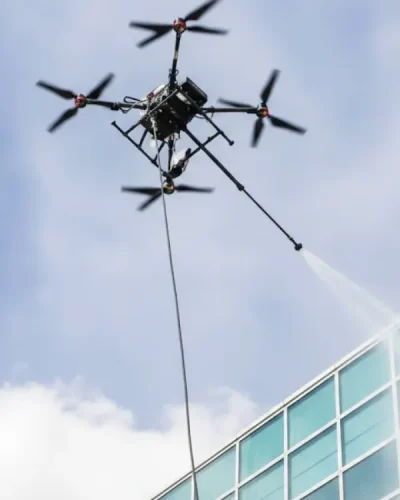
We provide drone building cleaning and drone facade cleaning for a wide range of properties where safety, speed, and consistent finish matter.
Stronger cleaning for stubborn dirt
Water spray loosens residue and removes the film that blocks sunlight—helping restore clarity and improve performance recovery.
Faster coverage on large arrays
With route planning and repeatable passes, drones can clean large rooftops and solar farm blocks efficiently.
Controlled water usage
Unlike open-hose washing, drones apply water only where needed in a managed pattern—reducing waste and helping limit runoff issues.
Safer than manual rooftop cleaning
Less roof walking, fewer fall risks, and reduced dependence on large crews for repeated cleaning cycles.
Optional inspection add-on
Add thermal + visual inspection to identify hot spots, broken glass, and recurring soiling patterns for O&M action.
Controlled water usage
Unlike open-hose washing, drones apply water only where needed in a managed pattern—reducing waste and helping limit runoff issues.
Water Spray Options We Offer
Eco-friendly detergent for oily residue (site-approved only)
Filtered/treated water (where required) to reduce water marks
Fan spray / wide coverage rinse for uniform cleaning
Spot spray mode for droppings and localized stains
Water Based vs Waterless
Option | Best For | Removes Best | Ideal Site Types | Typical Cleaning Plan |
Waterless Drones | Frequent routine cleaning where water is restricted | Loose dust, sand, pollen, light dry debris | Water-scarce/remote plants, highways/construction dust corridors, large rooftops needing quick cycles | Regular cycles (weekly/monthly) to prevent heavy buildup |
Water-Based Drones | Deep cleaning when dirt is sticky or bonded | Sticky grime/film, droppings marks, coastal salt haze, industrial residue | Coastal zones, industrial rooftops, long-uncleaned panels, plants with visible film | Periodic deep clean (monthly/quarterly) based on soiling |
Hybrid Plan | Sites with mixed soiling (dust + film/stains) | Combination: routine dust removal + targeted deep cleaning | Industrial + agriculture corridors, mixed exposure plants, block-wise soiling variation | Waterless routine + water-based deep clean occasionally |
Service Plans (Water-Based Cleaning)
Scheduled Deep Clean Programs
Quarterly for most commercial rooftops, monthly for high-soiling zones (industrial/agriculture/coastal), and bi-annual for low-soiling sites as a deep-clean cycle.
One-Time Deep Clean + Baseline Report
Best for commissioning, post-construction dust, pre-handover, or after storms—designed to restore clarity and performance quickly.
Portfolio / Multi-Site Maintenance
Centralized reporting across sites with cleaning history, plus optional inspection findings to support O&M planning.
Water Spray Options We Offer
Fan Spray / Wide Coverage Rinse
Uniform, consistent rinsing across panel rows for full-area cleaning.
Spot Spray Mode
Targeted spray for bird droppings, stain patches, and localized heavy-soiling zones.
Filtered / Treated Water (Where Required)
Helps reduce water marks and spotting, improving finish quality.
Eco-Friendly Detergent (Optional)
For oily residue or stubborn grime—used only with site approval and proper rinsing.
Why Choose Sky Sweeper Drones for Water Based Solar Panel Cleaning
Purpose-built sprayer drone systems
Designed specifically for solar arrays to deliver uniform spray coverage on large rooftops and solar farms.
Controlled spray settings
Optimized to protect panel glass/coatings while minimizing water waste and runoff.
Repeatable cleaning routes
Planned flight paths and checklists ensure consistent results every visit.
Optional thermal + visual inspection
Add reports that help O&M teams identify hot spots, defects, and recurring soiling patterns.
Clear documentation & service proof
Coverage notes and findings summaries for asset owners and facility managers—useful for audits and maintenance tracking.
FAQ - Water Based Solar Panel Cleaning Drones
Do water based solar panel cleaning drones remove bird droppings?
Yes—water-based spray cleaning is effective for droppings and stains. Very hardened buildup may need spot-treatment.
Will water spray drone cleaning leave water marks on panels?
Water marks depend on water quality and drying conditions. Using filtered/treated water and controlled spray helps reduce spotting.
How much water is used in drone solar cleaning?
It depends on array size and dirt severity. The advantage is controlled application compared to open-hose manual washing.
Is water-based drone cleaning safe for solar panels?
Yes, when pressure, distance, and coverage are controlled. We select settings based on site condition and surface requirements.
How often should I do water-based cleaning?
Many sites do quarterly deep cleaning, while high-soiling zones may need monthly cycles. Hybrid plans are common: waterless routine + periodic water-based deep clean.